Hotline: 098 712 3398 Email: [email protected]
14 SKUs

Hydraulic lifting table

Showing 1-13 12 views

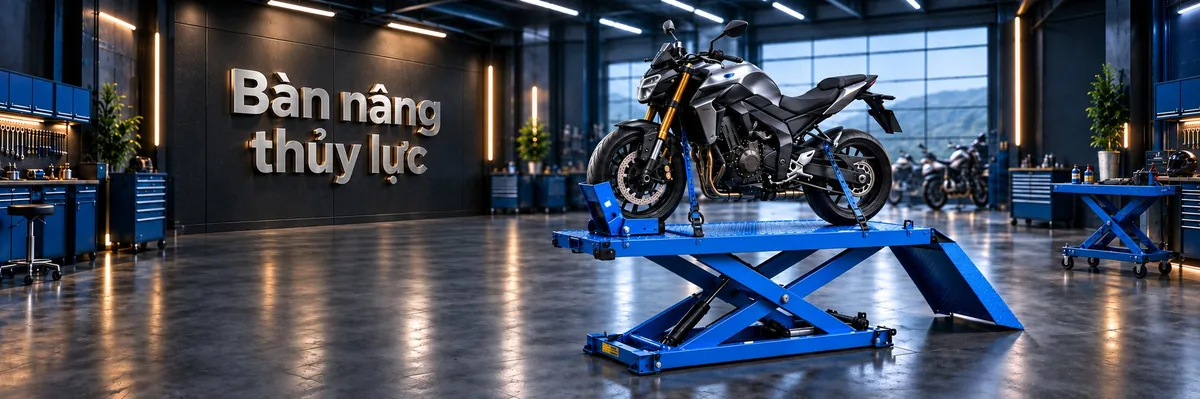
Hydraulic lifting tables are used to raise and lower motorcycles, mopeds and large-displacement motorbikes in professional repair workshops. The group uses a parallelogram scissor mechanism combined with a hydraulic system, allowing height adjustment from 195 mm to over 750 mm depending on the model. Lifting capacity ranges from 300 kg to 600 kg, covering everything from standard underbone bikes to large-displacement motorcycles.

Operating sources include hydraulic foot pumps, pneumatic pumps and electro-hydraulic pumps, suited to the different equipment conditions of each workshop. Table tops range from 660 mm to 1200 mm in width, and some models integrate a removable loading ramp, a safety locking device and remote control. In addition to the fixed versions, the group also includes mobile models combined with a hand trolley for convenient movement around the workshop.

Genuine imported FERVI products, with full warranty according to the distributor's terms.
Drag product cards to reorder this category. Release to save immediately.

Hydraulic lifting tables are used for raising and lowering motorcycles, mopeds and large-displacement motorbikes in professional repair workshops. The product group uses a parallelogram scissor mechanism combined with a hydraulic system, allowing height adjustment from 195 mm to over 750 mm depending on the model. Lifting capacity ranges from 300 kg to 600 kg, covering everything from standard step-through bikes to large-displacement motorbikes.

Power sources include foot-operated hydraulic pumps, pneumatic pumps and electro-hydraulic pumps, suiting workshops with different levels of equipment. Platform widths range from 660 mm to 1200 mm, and some models integrate a removable ramp, a safety lock and remote control. Besides the fixed versions, the group also includes mobile models combined with a hand trolley for easy movement around the workshop.

Products are officially imported from FERVI, with full warranty according to distributor regulations.

Hydraulic lifting tables serve the task of raising and lowering motorcycles, mopeds and two-wheeled vehicles in professional repair workshops. This product group uses a hydraulic mechanism combined with a parallelogram scissor system, allowing flexible adjustment of the working height according to maintenance needs. Models in the group have capacities from 300 kg to 600 kg, covering standard motorcycles through to large-displacement motorbikes.

Operating power sources include foot-operated hydraulic pumps, pneumatic pumps and electro-hydraulic pumps, depending on the equipment available in the workshop. Platforms are designed in a range of sizes, from 660 mm to 1200 mm in width, helping support many different types of vehicle. Lifting height ranges from 195 mm to over 750 mm, creating comfortable working space for technicians.

Some models also integrate a removable ramp, a safety lock and a remote control system, improving operating efficiency. In addition to fixed lifting tables, the group includes mobile versions combined with a hand trolley, convenient for moving around a warehouse or workshop.

Classification by operating power source

The power source determines lifting and lowering speed, the degree of automation and the ability to integrate into a production process. Models in the group fall into three main categories: foot-pump hydraulic, pneumatic hydraulic and electro-hydraulic. Each method has its own advantages in terms of investment cost, working speed and infrastructure requirements.

Model S008-M uses a foot-operated hydraulic pump, 400 kg capacity, a platform size of 1825 x 660 mm and a lifting height from 195 mm to 750 mm. This mechanism requires neither electricity nor compressed air, suiting small workshops or areas without a stable power supply. Model S027 also uses a foot pump, with a 600 kg capacity for large-displacement motorbikes. The pneumatic hydraulic category includes S013 with a 600 kg capacity, four height adjustment steps, a removable ramp and a safety lock. The pneumatic power source raises and lowers faster than a foot pump, reducing operating effort.

The electro-hydraulic category includes S027ATV, S029P and S029, all with a 600 kg capacity. Model S027ATV has an 1800 x 1200 mm platform, suited to ATVs and larger mopeds. Model S029P integrates a hydraulic pump and an electric control unit, allowing remote operation or integration into an automated system. Model S029 uses a parallelogram scissor mechanism for stable and accurate raising and lowering. The electric models suit workshops with a high workload requiring high speed.

Mobile lifting tables combined with a hand trolley

Mobile lifting tables combine the function of a hand trolley, helping transport goods or equipment around the workshop while also raising and lowering when needed. This group has swivel wheels, a foldable push handle and an integrated hydraulic mechanism. Capacity ranges from 300 kg to 500 kg, with lifting height varying by model.


Model 0010 has a 500 kg capacity and integrates a single-acting hydraulic cylinder with spring return, a hand brake and a foot-pedal lifting mechanism. The entire platform is raised by the hydraulic ram, convenient when the working height needs adjusting. Model 0075 has a 300 kg capacity, a parallelogram scissor mechanism driven by a hydraulic cylinder, and a push handle that folds compactly for storage. Model 0467 has a 350 kg capacity, a greater lifting height than 0010 and 0075, and integrates a hand brake and a similar scissor mechanism. This group suits warehouses, assembly workshops or areas where equipment must be moved frequently.

Equipment supporting vehicle positioning and movement

Besides the main lifting tables, the group also includes auxiliary equipment for securing, moving and positioning vehicles in confined spaces. These models do not use hydraulics but rely on mechanical mechanisms or clamping jacks, suiting smaller maintenance work or arranging vehicles in a showroom.

Model 0452 uses a mechanical mechanism with a 400 kg capacity, supporting motorcycle repair without an external power source. Model 0430 has a 300 kg capacity, sturdy swivel wheels, a steel surface with anti-slip ribs, and dedicated space for the side stand and the centre stand. This equipment helps move large-displacement motorbikes in confined spaces without lifting them high. Model 0241 locks the wheel of a two-wheeled motorbike, with a self-tilting mechanism that keeps the bike balanced, rigid locking by a pin, and adjustment to suit wheel size. Model 0217 clamps and lifts each car wheel to move the vehicle into position in confined spaces, with the vehicle weight pressing down on the jack to hold it in place.

How to choose according to use requirements

Choosing a lifting table depends on the vehicle type, frequency of use, workshop space and the available power source. A standard motorcycle repair workshop can use a foot-pump model such as S008-M or S027, saving on investment and maintenance costs. Workshops specialising in large-displacement motorbikes should choose a 600 kg model such as S027ATV or S029P, with a wide platform and a large lifting height.

If the workshop already has a compressed air system, model S013 increases working speed without additional investment in a power supply. Workshops with a high workload requiring a high level of automation should choose the electro-hydraulic group such as S029 or S029P, with integrated remote control. Warehouses or workshops that need to move equipment frequently can use 0010, 0075 or 0467, combining transport and lifting in one unit. Showrooms or small garages can use 0452, 0430 or 0241 to move and secure vehicles without a complex power source.

Notes on operation

Before lifting a vehicle, check that the actual load does not exceed the limit stated on the equipment label. Place the vehicle in the middle of the platform and ensure the centre of gravity is balanced to avoid tipping or slipping. With models that have a ramp, such as S013, lock the ramp firmly once the vehicle is in position. Models with a safety lock must have the lock engaged before repair work begins.

When using pneumatic hydraulic models, check that the air pressure meets the manufacturer's recommendation. Electro-hydraulic models require a stable power supply, avoiding overload or short circuits. Periodically check the hydraulic oil level, lubricate the joints and check the wheels for wear. Do not raise or lower abruptly, and avoid impacts that could damage the scissor mechanism. When storing mobile models, fold the push handle and keep them in a dry place to prevent moisture from rusting the steel frame.

The hydraulic lifting table group provides a range of options for motorcycle repair workshops, from simple foot-pump models to automated electric systems, and from fixed tables to mobile trolleys. Choosing the right model helps increase working productivity, reduce operating effort and maintain safety for both technicians and vehicles.